Sunday, 15 March 2026

Review: Real Tigers

Real Tigers Cover Art (TV Tie-in)

Real Tigers by Mick Herron is the third entry in the superb Slough House series, and by this point the rhythm and tone of Herron’s world feel perfectly assured. The novel builds on the foundations laid in Slow Horses and Dead Lions, delivering another sharp, tense, and often darkly funny espionage story centred on the disgraced intelligence officers exiled to Slough House. As with the earlier books, Herron blends intricate plotting with an acute understanding of flawed human behaviour.

The central premise of the Slough House series remains wonderfully subversive. Instead of focusing on elite agents operating at the glamorous edge of intelligence work, Herron’s attention falls on those who have made mistakes. These are the bureaucratic misfits and professional embarrassments of the intelligence world, assigned to menial tasks in the hope that they will quietly resign. Yet again and again these damaged operatives find themselves caught up in situations far beyond the expectations of their superiors.

In Real Tigers, that situation is both personal and immediate. One of the Slough House agents is abducted, drawing the rest of the team into a desperate attempt to uncover what is happening and why. What follows is a story filled with deception, hidden agendas, and political manoeuvring. The plot, on paper, might seem almost implausible. It involves shifting allegiances, covert agendas within the intelligence services, and a conspiracy that grows steadily more complicated as the truth emerges. Yet Herron has a remarkable talent for making such narratives feel convincing. The motivations behind the intrigue are rooted in ambition, fear, and institutional self preservation, which makes the unfolding events feel believable even when the scale of the conspiracy grows.

One of Herron’s greatest strengths is his portrayal of character. The inhabitants of Slough House are not action heroes. They are tired, resentful, occasionally petty people who have been sidelined by the system they once served. Their reactions to stress feel entirely human. When faced with danger or pressure they argue, hesitate, and sometimes make poor decisions. They experience frustration, anger, and flashes of courage that often surprise even themselves. This realism gives the novel a texture that many thrillers lack. The tension arises not only from the external threat but from the complicated personalities involved.

The machinations of power within the intelligence services form another compelling aspect of the story. Herron portrays the hierarchy of British intelligence as a place where reputation often matters more than truth and where protecting one’s position can take precedence over doing the right thing. Senior officials manipulate events behind the scenes while trying to ensure that responsibility falls on someone else if things go wrong. This cynical yet believable depiction of institutional politics adds depth to the narrative and reinforces the sense that the Slough House agents are operating within a deeply flawed system.

At the centre of the series, as always, is Jackson Lamb, the slovenly yet brilliantly perceptive head of Slough House. Lamb’s abrasive personality and razor sharp instincts make him one of the most distinctive figures in modern spy fiction. His interactions with both allies and enemies are often laced with biting humour, but beneath the insults and cynicism lies a genuine loyalty to the people under his command.

The audiobook experience is greatly enhanced by the narration of Sean Barrett. Barrett has become closely associated with the Slough House series, and his performance here captures its tone perfectly. His portrayal of Jackson Lamb is particularly memorable, conveying the character’s mixture of laziness, cunning, and ruthless intelligence with effortless authority.

Barrett’s narration excels in its restraint. Rather than exaggerating the drama, he allows the tension of the story to build naturally through pacing and subtle shifts in tone. Each member of the Slough House team receives a distinct voice, helping listeners keep track of the large cast while also highlighting the individuality of each character. During moments of crisis, Barrett’s delivery communicates the strain and urgency without losing the dry humour that runs throughout Herron’s writing.

Overall, Real Tigers stands as another excellent instalment in the Slough House series. It combines a cleverly constructed plot with richly drawn characters and a sharp understanding of the messy realities of power and bureaucracy. The story may occasionally stretch plausibility, but it remains grounded by the authenticity of its people and their reactions. With Sean Barrett’s superb narration bringing every scene to life, the audiobook becomes an absorbing and thoroughly rewarding experience.

Buy your copy here

Wednesday, 11 March 2026

Review: Not Till We Are Lost

Not Till We Are Lost Cover Art

Not Till We Are Lost by Dennis E. Taylor continues the ever expanding Bobiverse saga with confidence, humour, and a growing sense of philosophical depth. By this stage in the series, Taylor has created a remarkably rich setting in which artificial minds, human colonies, alien mysteries, and technological ingenuity all intersect. What makes this particular instalment so compelling is the way it balances those grand science fiction ideas with a continued focus on the personalities and evolving identities of the many Bob clones who inhabit the narrative.

The central premise of the Bobiverse remains delightfully imaginative. Bob Johansson, once a software engineer on Earth, now exists as a replicated digital consciousness controlling self replicating space probes. Over time these probes have spread across the galaxy, creating countless versions of Bob. Each new copy begins with the same core memories but gradually develops its own interests, quirks, and priorities. In Not Till We Are Lost, this divergence becomes an increasingly important part of the story.

The novel explores a galaxy that is now far more populated and politically complex than in earlier books. Human colonies have taken root in multiple systems, and the Bobs continue to serve as explorers, engineers, protectors, and sometimes reluctant mediators between competing factions. At the same time, the Bobs themselves are beginning to fragment ideologically. Some remain deeply invested in supporting humanity’s expansion, while others are more interested in pursuing pure exploration or experimenting with new forms of existence. This tension adds an intriguing layer of uncertainty to the narrative.

Taylor’s strength has always been his ability to introduce sophisticated scientific ideas without losing the sense of adventure that makes the series so enjoyable. That skill is very much on display here. The novel continues to explore concepts such as artificial intelligence, interstellar travel, and megastructures while also raising more personal questions about identity and purpose. If a copy of a mind evolves far enough from its original template, is it still the same person? And what responsibilities does that being have toward its origins?

Despite these philosophical undertones, the story never becomes heavy or abstract. The humour that has defined the Bobiverse from the beginning remains a constant presence. Conversations between the Bobs are filled with friendly sarcasm, pop culture references, and occasional exasperation as they debate the best course of action. These exchanges give the narrative a warm and conversational tone that keeps even the most complex discussions engaging.

The pacing of the novel also deserves praise. Taylor moves confidently between multiple plotlines, each involving different groups of Bobs and human allies confronting new challenges. Some threads focus on exploration and discovery, while others involve political tensions between colonies or encounters with unfamiliar alien phenomena. The variety keeps the story fresh and reinforces the sense that the Bobiverse is a living, evolving setting rather than a static backdrop.

The audiobook benefits enormously from the narration of Ray Porter, whose voice has become synonymous with the series. Porter brings a natural charm and intelligence to the role, capturing Bob Johansson’s blend of curiosity, wit, and occasional frustration perfectly. His delivery feels conversational and relaxed, which matches the tone of Taylor’s writing beautifully.

Narrating a story that features dozens of variations of the same character could easily become confusing, yet Porter handles it with remarkable skill. Each Bob sounds recognisable as part of the same origin while still possessing subtle differences in tone and cadence. These distinctions help listeners keep track of the many perspectives without losing the sense that they all began as the same individual.

Porter’s pacing is another major strength. The Bobiverse novels frequently shift between technical explanations, humorous exchanges, and moments of tension. Porter manages these transitions smoothly, allowing the science to remain accessible while ensuring that dramatic scenes retain their impact. His timing also enhances the humour, delivering many of the Bobs’ dry observations with impeccable comedic rhythm.

Ultimately, Not Till We Are Lost stands as another strong entry in the Bobiverse series. It expands the scope of the setting while continuing to explore the personal evolution of its central character in all his many forms. The combination of inventive science fiction concepts, engaging dialogue, and thoughtful themes makes the novel both entertaining and intellectually stimulating.

With Ray Porter once again providing a superb narration that captures every nuance of Taylor’s writing, the audiobook becomes an especially rewarding experience. For fans of the series, this instalment offers both fresh adventures and deeper insight into what it truly means to be Bob in a galaxy that is growing more complicated with every passing year.

Buy your copy here

Review: Heaven's River

Heaven's River Cover Art

Heaven's River by Dennis E. Taylor marks a fascinating new chapter in the Bobiverse series. Following the broad, galaxy spanning resolution of the original trilogy, this fourth instalment narrows its focus in an unexpected and refreshing way. Rather than centring on large scale interstellar conflict, the novel becomes a deeply immersive exploration story that blends classic science fiction adventure with a mystery that unfolds layer by layer.

By the time this novel begins, the Bobiverse has grown enormously. Hundreds of Bob clones are scattered across the galaxy, pursuing different missions and shaping the future of humanity in countless subtle ways. Yet the narrative here centres on a more specific problem. One of the Bobs, Bender, has disappeared while investigating an enormous alien structure known as a topopolis, a colossal artificial habitat that forms a continuous cylindrical world. This mysterious megastructure, dubbed Heaven’s River, becomes the primary setting for much of the novel.

The shift in scale works remarkably well. Instead of moving rapidly between star systems and multiple plotlines, Taylor spends considerable time exploring the strange ecosystem and culture that exist within the topopolis. The civilisation inhabiting Heaven’s River is both alien and strangely familiar. Its society has developed over vast stretches of time, shaped by myths, technological decline, and incomplete knowledge of its own origins. The process of discovering how this world functions is one of the book’s greatest pleasures.

To investigate Bender’s disappearance without alarming the inhabitants, one of the Bobs adopts a covert approach. Taking on the identity of a native creature within the ecosystem, he embarks on a journey that feels almost like a blend of science fiction and epic quest narrative. This section of the novel is rich with world building. Taylor clearly enjoys imagining the biological, cultural, and technological details of the civilisation living inside the megastructure. From social customs to political tensions, the environment feels intricate and surprisingly believable.

While the central quest drives the story forward, the novel also continues to develop the broader Bobiverse. Back in known space, the ever expanding population of Bobs is beginning to diverge in meaningful ways. Some remain committed to supporting humanity’s growth across the stars, while others are starting to pursue their own interests and philosophical paths. This divergence raises intriguing questions about identity and purpose. If each Bob begins as a copy of the same mind but gradually evolves into something unique, how long can they truly be considered the same individual?

Taylor handles these themes with a light touch. The book never becomes overly philosophical, yet the questions linger in the background of many conversations. The humour that defines the series is still very much present. The Bobs continue to exchange pop culture references and playful sarcasm, creating moments of levity even when the stakes are high. These interactions maintain the warm, conversational tone that has always been central to the series’ charm.

The audiobook experience is once again elevated by the exceptional narration of Ray Porter. Porter has become almost inseparable from the Bobiverse, and his performance here reinforces why he is such a perfect match for the material. His portrayal of Bob Johansson and his many variations captures the mixture of curiosity, humour, and analytical thinking that defines the character.

In Heaven’s River, Porter faces an especially demanding task. The novel introduces a wide range of new voices and perspectives, including members of the alien civilisation inhabiting the topopolis. Porter differentiates these characters with clarity while maintaining the immersive flow of the narrative. His pacing during the exploration sequences is particularly effective. He allows the sense of wonder to unfold gradually, giving listeners time to absorb the strangeness of the environment before the tension rises again.

Another strength of Porter’s narration is his handling of dialogue between multiple Bobs. Subtle shifts in tone and rhythm make each participant in these conversations feel distinct without losing the underlying sense that they share a common origin. This delicate balance helps maintain the internal logic of the premise while keeping the story easy to follow.

Overall, Heaven’s River stands as one of the most imaginative entries in the Bobiverse series. By focusing on exploration, mystery, and cultural discovery, it offers a refreshing change of pace while still building on the themes that have defined the saga from the beginning. Combined with Ray Porter’s consistently excellent narration, the novel becomes a richly textured listening experience that rewards both long time fans and newcomers eager for thoughtful, adventurous science fiction.

Buy your copy here

Review: All These Worlds

 
All These Worlds Cover Art

All These Worlds by Dennis E. Taylor brings the initial Bobiverse trilogy to a satisfying and ambitious conclusion. After the exploratory wonder of We Are Legion (We Are Bob) and the expanding scope of For We Are Many, this third instalment focuses on resolution. Storylines converge, long running threats intensify, and the many versions of Bob Johansson must work together to safeguard both humanity and their own future among the stars.

By this point in the series, the Bobiverse has grown into a remarkably complex network of characters, locations, and competing priorities. Numerous Bob clones are scattered across distant systems, each pursuing different missions that range from exploration and colonisation to defence against hostile forces. What might have become confusing instead feels like the natural evolution of the premise. The various Bobs have developed distinct personalities and interests, and watching their differing approaches to problems continues to be one of the series’ greatest pleasures.

In All These Worlds, the stakes feel higher than ever. Humanity’s fragile off world colonies are still struggling to survive after the devastation of Earth, and the Bobs find themselves acting as protectors, engineers, diplomats, and sometimes reluctant warriors. The looming threat of the aggressive alien species known as the Others drives much of the tension. Their presence forces the Bobs to confront the reality that exploration is not always peaceful and that survival may depend on difficult choices.

Despite the growing scale of the conflict, Taylor maintains the sense of curiosity and humour that defines the series. Scientific problem solving remains central to the narrative. Complex engineering challenges, creative uses of technology, and clever strategic thinking are often the tools that determine success or failure. The dialogue between the Bobs continues to sparkle with references to science fiction and pop culture, giving the novel a relaxed and conversational tone even when the situation becomes dire.

The emotional core of the story also grows stronger in this final entry. Questions about identity, responsibility, and the meaning of personhood have lingered in the background throughout the trilogy. Here they come more clearly into focus. The Bobs must consider what it means to guide humanity while also preserving their own independence. Some embrace their expanding responsibilities, while others begin to question whether they want to remain tied to human affairs at all.

The audiobook benefits enormously from the narration of Ray Porter. Porter’s performance has been a defining element of the Bobiverse experience from the beginning, and he brings the trilogy to its conclusion with energy and precision. His portrayal of Bob Johansson captures the character’s intelligence, curiosity, and dry wit perfectly.

Handling a story filled with dozens of variations of the same character is no small challenge, yet Porter manages it with impressive clarity. Each Bob feels recognisable while still subtly distinct, allowing listeners to follow the shifting perspectives without confusion. His pacing is excellent, particularly during scenes that involve technical discussions or strategic planning. These moments remain engaging because Porter delivers them with confidence and enthusiasm.

Ultimately, All These Worlds succeeds as both a thrilling science fiction adventure and a thoughtful conclusion to the trilogy’s central arc. It balances large scale action with humour and philosophical reflection, bringing many storylines to a satisfying close while still leaving room for future exploration. Combined with Ray Porter’s outstanding narration, it offers a finale that feels both exciting and rewarding for anyone who has followed the Bobs on their remarkable journey through the galaxy.

Buy your copy here

Friday, 6 March 2026

Audible Affiliate


As many of you are aware I listen to a lot of audiobooks while I paint or play games.

With that in mind I'd like to announce that Audible have offered me this affiliate link so you can try it out for yourselves. Just click the link and sign up for a free trial to get access to the full range of Audible Originals for a full month (monthly billing starts after this if not cancelled) and up to two audiobooks of your choice to keep no matter what. After the trial period you'll get one audiobook to keep and access to the Originals catalogue while a member.

I've been using Audible for many years now and honestly it's great. If you want something for while you're doing household chores, exercising, out shopping or whatever else you might enjoy I can't recommend it enough so click the link below and enjoy.

https://amzn.to/4cpZcR0 

Review: For We Are Many

For We Are Many Cover Art

For We Are Many by Dennis E. Taylor continues the story begun in We Are Legion (We Are Bob) and expands its universe in satisfying and often surprising ways. Where the first book introduced the concept of a human consciousness turned into a self replicating interstellar probe, this sequel explores the consequences of that idea on a far larger scale. The result is a novel that deepens the humour, the science, and the philosophical questions that made the original so enjoyable.

At the centre of the story is still Bob Johansson, or more accurately the ever growing collection of Bob replicas scattered across the galaxy. Each probe creates new copies of itself as it explores, and over time those copies begin to diverge in personality and priorities. This creates a narrative structure that jumps between different storylines as the various Bobs tackle wildly different challenges. Some are involved in the practical work of colonising new systems and supporting fragile human settlements, while others pursue exploration or confront unexpected alien threats.

What makes the novel work so well is the sense of curiosity that drives every thread. Taylor clearly enjoys imagining the practical details of interstellar expansion, and the book is filled with clever solutions to problems involving engineering, communication, and survival. At the same time, the story never loses its sense of humour. The interactions between the Bobs remain one of the series’ greatest strengths. They share the same cultural background and love of science fiction, which leads to a steady stream of playful references and lighthearted arguments.

Yet For We Are Many also introduces greater stakes. As the Bobs spread farther from Earth, they encounter complications that are far more dangerous than simple mechanical problems. Rival human factions, fragile colonies, and the discovery of a genuinely hostile alien species all push the narrative into darker territory. The book retains its wit, but there is an increasing sense that the galaxy is not as empty or as forgiving as it first appeared.

The audiobook is once again brought vividly to life by the narration of Ray Porter. Porter proved in the first book that he was an ideal match for Taylor’s conversational style, and his performance here continues to shine. With so many versions of Bob appearing across multiple storylines, it would be easy for the narration to become confusing. Porter handles this challenge with remarkable skill, giving each Bob a slightly distinct tone while maintaining the underlying sense of shared identity.

His timing also enhances the novel’s humour. Many of the jokes rely on quick exchanges or dry observations, and Porter delivers them with effortless confidence. At the same time, he adjusts his delivery when the story moves into more serious territory, allowing tension and uncertainty to come through clearly. This balance between lightness and drama helps maintain the novel’s pacing and keeps the listener fully engaged.

Overall, For We Are Many is a strong and entertaining continuation of the Bobiverse saga. It takes the imaginative premise of the first novel and builds on it with greater scope, richer conflicts, and an expanding cast of characters who all share the same origin. Combined with Ray Porter’s excellent narration, the result is a lively and absorbing science fiction adventure that leaves the listener eager to follow the Bobs even farther into the cosmos.

Buy your copy here

Thursday, 5 March 2026

Review: We Are Legion (We Are Bob)

We Are Legion (We Are Bob) Cover Art

We Are Legion (We Are Bob) by Dennis E. Taylor is one of those rare science fiction novels that manages to be clever, funny, and genuinely thought provoking all at once. It combines big speculative ideas with a very human sense of humour, creating a story that feels both expansive and personal. The result is an immensely enjoyable listen that balances technical curiosity with an engaging narrative voice.

The premise is wonderfully imaginative. Bob Johansson, a software engineer and enthusiastic science fiction fan, signs up to have his mind cryogenically preserved after death. When he eventually awakens, it is not in a new body but as the controlling intelligence of a self replicating interstellar probe. From that point forward, the story evolves into a fascinating exploration of identity, consciousness, and the practical realities of exploring and colonising the galaxy.

One of the novel’s greatest strengths lies in how it handles these large ideas with a light and accessible touch. Taylor introduces concepts such as artificial intelligence, von Neumann probes, and interstellar travel without becoming bogged down in technical exposition. The scientific elements feel plausible enough to satisfy science fiction fans, yet they never overwhelm the narrative. Instead, they serve as the foundation for a series of inventive challenges and discoveries as Bob and his various cloned iterations spread through space.

The multiple versions of Bob are a particularly inspired element of the story. Each copy develops slightly different traits and interests over time, which leads to a range of perspectives and personalities within what is technically the same consciousness. This allows Taylor to explore philosophical questions about individuality and continuity while maintaining a brisk, entertaining pace. The interactions between the Bobs are often humorous, filled with pop culture references and the kind of friendly bickering one might expect from a group of like minded enthusiasts.

The audiobook is elevated significantly by the narration of Ray Porter. Porter’s performance is a perfect match for the tone of the novel. His delivery captures Bob’s wry humour, curiosity, and occasional exasperation with effortless charm. Because the story involves many versions of the same character, the narration could easily have become confusing, but Porter handles the task with impressive clarity. Subtle shifts in tone and cadence help distinguish between the different Bobs while still maintaining the sense that they all share the same origin.

Porter also excels at pacing. The novel moves quickly between moments of technical problem solving, exploration, and quiet reflection. His narration keeps the momentum steady, ensuring that the more complex ideas remain engaging rather than overwhelming. When the story shifts into more dramatic territory, he allows the tension to build naturally without sacrificing the underlying sense of wonder that drives the narrative.

Ultimately, We Are Legion (We Are Bob) succeeds because it never loses sight of its central appeal. It is a story about curiosity, ingenuity, and the thrill of discovery. Even as the scale expands to encompass entire star systems, the personality at the heart of the story keeps everything grounded.

For listeners who enjoy imaginative science fiction with a strong sense of humour and a compelling central performance, this audiobook is an absolute delight. Ray Porter’s narration complements Taylor’s inventive storytelling perfectly, resulting in an experience that is both entertaining and memorable.

Buy your copy here

Tuesday, 3 March 2026

Review: King Sorrow


King Sorrow by Joe Hill is, quite simply, one of the most extraordinary reading experiences I have had in years. It is a novel of memory, imagination, grief and creative obsession, wrapped in prose so rich and immersive that it seems to breathe. Long after finishing it, I found myself returning to its images and ideas, replaying certain passages in my mind. It has become one of my all time favourites.

At its heart, King Sorrow is a story about childhood invention and the dangerous power of stories themselves. Hill takes what could have been a familiar premise and transforms it into something unsettlingly original. The narrative moves between past and present with assurance, gradually revealing how a game born in youthful imagination acquires a terrible weight in adulthood. The depth of the storytelling is remarkable. Every thread feels deliberate, every character carefully drawn. There is a sense that nothing is incidental, that even the smallest detail may carry a quiet, accumulating dread.

Central to the novel’s power is its antagonist. King Sorrow himself stands among the most chilling figures I have encountered in fiction. He is not frightening merely because of what he does, but because of what he represents. He embodies the persistence of old fears, the way stories can outgrow their creators, and the unsettling possibility that imagination has teeth. Hill resists the urge to overexplain him, which makes him all the more disturbing. King Sorrow feels mythic and intimate at once, a presence that seeps into the margins of the narrative and waits patiently. The tension he generates is sustained and at times almost unbearable.

Hill’s language plays a crucial role in this effect. His prose is lush without being indulgent, textured yet precise. There are passages that feel almost dreamlike, lulling the reader into a false sense of calm. The rhythms of the sentences slow, the imagery softens, and it is easy to drift along, absorbed in nostalgia or reflection. Then, with unnerving control, Hill tightens the screws. The tension ramps up swiftly, often within the space of a paragraph, transforming a quiet moment into something sharp and threatening. That interplay between comfort and menace is handled with consummate skill.

The audiobook production elevates an already exceptional novel into something truly special. The stellar voice cast brings distinct perspectives and emotional nuance to the narrative. Each performer inhabits their character fully, lending authenticity to shifting viewpoints and timelines. The differentiation between voices is clear without ever feeling theatrical. Instead, it feels intimate, as though each character is confiding directly in the listener.

What makes this ensemble performance so effective is the way the voices complement Hill’s prose. When the language drifts into its more lyrical passages, the narrators lean into the softness, allowing the words to wash over the listener. When dread begins to gather, subtle changes in tone and pacing signal the shift before the text makes it explicit. The moments of confrontation, particularly those involving King Sorrow, are delivered with a restraint that heightens their impact. The horror is allowed to unfold naturally, without exaggeration.

Beyond its scares, King Sorrow succeeds because of its emotional honesty. It understands the bonds of childhood friendship, the way shared imagination can create both refuge and risk. It acknowledges the cost of growing up, of leaving parts of oneself behind, and the temptation to revisit old stories in search of comfort. That emotional grounding ensures that the horror never feels gratuitous. It matters because the characters matter.

In the end, this is a novel that feels both expansive and deeply personal. Its world is fully realised, its antagonist unforgettable, and its prose beautifully controlled. Combined with a superb multi voice narration that enriches every scene, King Sorrow stands as a landmark achievement. It is unsettling, poignant and masterfully told, and it has secured a permanent place among my most treasured reads.

Buy your copy here

Sunday, 1 March 2026

Review: Sabbat War


Sabbat War
 by Dan Abnett is a fitting and deeply satisfying addition to the Gaunt’s Ghosts saga. Rather than presenting a single continuous campaign narrative, this anthology gathers a sequence of interlinked stories that expand, enrich, and in many cases resolve threads that have run across the wider arc of the Sabbat Worlds Crusade. The result is a collection that feels both reflective and purposeful, offering momentum while also taking stock of everything that has come before.

One of the great strengths of the anthology format is the space it creates. Across the main novels, the relentless pace of war often leaves little room to linger on secondary characters or smaller consequences. Here, those moments are given room to breathe. Loose threads that might otherwise have remained dangling are carefully drawn together. Long running tensions are addressed. Character arcs that have simmered in the background are brought into sharper focus. The structure allows Abnett to move between perspectives and tones with confidence, shifting from battlefield intensity to quieter, more intimate scenes without disrupting the overall cohesion.

Equally rewarding is the way the collection provides a home for what might be called side quest stories. These are not trivial diversions, but narratives that explore the margins of the crusade. They highlight actions taking place beyond the immediate spotlight of Colonel-Commissar Ibram Gaunt and the Tanith First. By doing so, they broaden the scope of the conflict and reinforce the sense that the Sabbat Worlds Crusade is a vast, many layered undertaking. The cumulative effect is a richer tapestry. Individual missions, personal reckonings, and isolated acts of heroism all contribute to the larger historical sweep.

As always with Gaunt’s Ghosts, the emotional core lies in the characters. Even within shorter formats, Abnett maintains his trademark focus on human reactions to extraordinary pressure. Soldiers carry exhaustion and grief alongside duty. Leaders wrestle with compromise and responsibility. Moments of camaraderie and dark humour punctuate the grim realities of attrition warfare. The anthology structure sharpens these glimpses, allowing single episodes to crystallise the emotional stakes in ways that complement the broader narrative.

The audiobook production enhances this experience significantly. Toby Longworth delivers his customary authority and depth, capturing the grit and weary resilience of the Ghosts with impressive consistency. His voice has become closely associated with the series, and he handles both large scale combat and quiet introspection with equal skill. The clarity of his character distinctions ensures that even in a multi perspective collection, listeners never lose their footing.

Emma Gregory adds further dimension to the performance. Her narration brings nuance and emotional intelligence to the stories she helms, particularly in scenes that hinge on personal reflection or moral tension. The contrast between her delivery and Longworth’s strengthens the anthology’s varied texture, giving each story its own tonal identity while maintaining continuity within the shared universe.

Overall, Sabbat War stands as both a celebration and a consolidation of the Gaunt’s Ghosts saga. By tying off lingering strands and giving space to smaller narratives, it enriches the series as a whole. With strong storytelling and excellent narration, it is an absorbing and rewarding listen for long time readers and newcomers alike.

Buy your copy here

Friday, 27 February 2026

Review: The Chronicles of Pern: First Fall


The Chronicles of Pern: First Fall
 by Anne McCaffrey offers a rewarding return to one of science fiction’s most beloved worlds. Rather than focusing solely on the sweeping, dragon filled epics that define the core novels, this collection of short stories turns its attention to formative and sometimes overlooked moments in Pern’s history. The result is a volume that deepens the mythology and enriches the emotional texture of the wider saga.

For long time readers of the Pern series, one of the great pleasures here is the way these stories fill in gaps in the established lore. McCaffrey explores the early days of colonisation, the struggles of adaptation, and the incremental discoveries that shaped the society later generations would inherit. Events that might once have been referenced only in passing are given space to unfold. Seeing how certain traditions began, how dragons and riders evolved in response to Thread, and how political and social structures solidified adds depth to everything that follows in the chronology.

It is especially satisfying to witness relatively minor events take centre stage. In the main novels, history often looms large and dramatic, dominated by major crises and heroic figures. In this collection, McCaffrey allows quieter developments to matter. Scientific breakthroughs, logistical decisions, and personal sacrifices that might otherwise have been footnotes are treated with care and narrative weight. These glimpses into lesser known corners of Pern’s past make the world feel lived in and organic. They remind the reader that history is not only shaped by grand battles but also by incremental choices and everyday courage.

This window into smaller scale moments makes for much richer world building. Pern has always stood out for its convincing blend of science fiction and fantasy, and these stories reinforce that balance. The colonists’ technical ingenuity sits alongside the wonder of dragonkind. The tension between preserving knowledge and adapting to necessity feels authentic. By illuminating transitional periods and behind the scenes developments, McCaffrey strengthens the internal logic of the setting. The world feels layered, with cultural memory and hard won experience underpinning every later triumph.

The audiobook narration by Meredith McRae brings clarity and warmth to the text. McRae handles the shifting perspectives competently and differentiates characters with subtle vocal changes. Her pacing is steady and measured, which suits the reflective tone of many of the stories. There is a calm assurance in her delivery that complements the historical nature of the material.

My only minor niggle is that the narration occasionally feels a little flat. In moments of heightened drama or emotional intensity, I sometimes wished for greater variation in tone. The performances are always clear and professional, but they do not always capture the full sweep of feeling that some scenes seem to invite. That said, this is a small reservation in what is otherwise an engaging listening experience.

Overall, The Chronicles of Pern: First Fall is a valuable and satisfying addition to the Pern canon. It rewards dedicated fans with deeper context and offers a richer understanding of the world’s foundations. Even the quieter stories resonate, proving once again the enduring strength of McCaffrey’s creation.

Buy your copy here

Monday, 23 February 2026

Review: Anarch


Anarch by Dan Abnett is a powerful and emotionally charged entry in the long running Gaunt’s Ghosts series. Set against the brutal backdrop of the Sabbat Worlds Crusade, it delivers everything readers have come to expect from the saga: ferocious combat, intricate military strategy, and, most importantly, a deep investment in the men and women of the Tanith First and Only.

At this stage in the series, Abnett has long since proven his ability to balance large scale warfare with intimate character work. In Anarch, that balance feels particularly refined. The campaign against the arch enemy known as Urlock Gaur reaches a fever pitch, and the tension is sustained across multiple fronts. Battles are vividly rendered, chaotic yet coherent, and the sense of attrition is palpable. Victories feel costly, and losses carry real weight.

What continues to distinguish Gaunt’s Ghosts from many other entries in the wider Warhammer 40,000 universe is the realism of its characters. These are not unbreakable super soldiers but tired, scarred infantry who have endured years of relentless conflict. In Anarch, their reactions to stress feel profoundly human. There is fear, frustration, dark humour, and sometimes emotional withdrawal. Leadership decisions are second guessed. Grief lingers. Bonds of loyalty are tested under impossible pressure. Abnett gives space to these responses, allowing quiet conversations and private doubts to sit alongside the thunder of artillery. It is this grounding in recognisable human behaviour that gives the novel its emotional force.

I have enjoyed every Gaunt’s Ghosts novel in the series, and Anarch reinforces why that is the case. Yet there is also a sense of approaching finality. Threads that have run for many volumes begin to tighten. Long standing rivalries and destinies edge closer to resolution. While it is bittersweet, I find myself pleased that the series appears to be drawing near to its conclusion. Abnett has sustained this epic for decades with remarkable consistency, and there is something fitting about seeing it build toward what promises to be a meaningful end rather than continuing indefinitely.

The audiobook is elevated further by the narration of Toby Longworth. Longworth has become synonymous with Black Library audio productions, and his performance here is exemplary. He captures the stoic authority of Ibram Gaunt while also differentiating the wide cast of Ghosts with clarity and subtlety. His pacing during battle scenes conveys urgency without descending into confusion, and in quieter moments he allows emotion to surface naturally. The strain in a voice, the hesitation before an order, the subdued tone of a soldier facing overwhelming odds all feel authentic. His narration enhances the sense of realism that Abnett builds on the page.

Overall, Anarch stands as one of the most compelling entries in Gaunt’s Ghosts. It is intense, character driven, and emotionally resonant. For long time readers, it offers both satisfaction and the promise of closure. For listeners, Longworth’s superb performance makes it an experience that is as immersive as it is moving.

Buy your copy here

Thursday, 19 February 2026

Review: Dead Lions


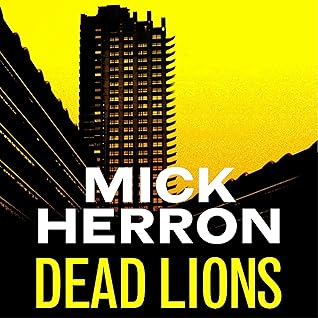
Dead Lions, the second instalment in Mick Herron’s acclaimed Slough House series, deepens both the emotional stakes and the satirical bite introduced in Slow Horses. Herron takes what could have been a straightforward espionage caper and turns it into something far richer: a tense, darkly funny, and unexpectedly moving exploration of loyalty, failure, and institutional neglect.

The novel begins with what appears to be a natural death—an old Cold War operative found dead on a bus. But in Herron’s hands, nothing is ever that simple. The plot that unfolds is, on the surface, almost implausible in its complexity: dormant Russian sleeper agents, bureaucratic cover-ups, and interdepartmental manoeuvring that border on farce. Yet it all feels oddly believable. Herron grounds the high-stakes intrigue in painstaking procedural detail and, more importantly, in character. However unlikely the wider conspiracy may seem, the human motivations driving it—career preservation, pride, fear, resentment—are entirely convincing.

That truly distinguishes Dead Lions is the realism of its characters. The disgraced agents of Slough House are not glamorous operatives but bruised professionals nursing past mistakes. Their reactions to stress feel painfully authentic: frayed tempers, flashes of pettiness, gallows humour, and moments of genuine courage emerging almost in spite of themselves. When one of their own dies, the response is neither melodramatic nor stoically heroic. Instead, Herron shows grief in awkward silences, misdirected anger, and a stubborn determination to uncover the truth. The emotional fallout reverberates through the team, lending the narrative weight and texture. These are people who feel the cost of their work.

Central to the audiobook’s success is the superb narration by Sean Barrett. Barrett’s performance captures Herron’s tonal balancing act perfectly. His rendering of Jackson Lamb is a particular triumph, by turns slovenly, sardonic, and razor-sharp, while the other members of Slough House are given distinct, lived-in voices. Barrett excels at conveying subtext; a slight pause or change in cadence suggests volumes about a character’s internal state. During moments of tension or grief, he resists overstatement, allowing the emotional truth of the scene to emerge naturally. The result is an immersive listening experience that heightens both the humour and the pathos.

Buy your copy here

Saturday, 7 February 2026

Review: Fear the Past


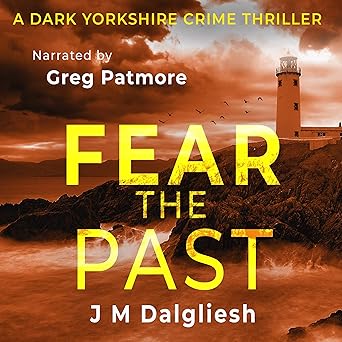
 Fear the Past by J.M. Dalgliesh is a gripping addition to the Dark Yorkshire series, delivering a layered and emotionally resonant crime story that lingers well beyond its final chapter. Dalgliesh continues to demonstrate his strength in crafting intricate mysteries rooted in atmosphere and character, and this instalment is no exception.


At the heart of the novel Detective Inspector Caslin who commands particular attention here. The mystery itself is deftly constructed, unfolding through a web of past secrets, present dangers, and carefully placed revelations. Dalgliesh excels at showing how history refuses to stay buried, and the case develops with a steady, compelling momentum. The interconnectedness with earlier books in the series adds meaningful depth; long-running character arcs and subtle callbacks reward returning readers without alienating newcomers. The broader narrative tapestry feels deliberate and cohesive, reinforcing the sense that every event reverberates beyond a single investigation.

The audiobook narration by Greg Patmore elevates the experience even further. Patmore’s portrayal of DI Caslin is particularly striking. His delivery is measured, controlled, and almost laconic, perfectly capturing Caslin’s analytical mind and understated authority. Rather than overdramatizing key moments, Patmore allows tension to simmer, which makes the emotional beats land with greater authenticity. His character distinctions are clear without being theatrical, and his pacing mirrors the procedural intensity of the investigation. The result is an immersive listening experience that feels both intimate and cinematic.

Overall, Fear the Past is a strong and satisfying entry in the series; thoughtful in its plotting, rich in character development, and enhanced significantly by Patmore’s nuanced narration. It stands as a testament to Dalgliesh’s skill in blending procedural precision with emotional depth.

Buy your copy here

Tuesday, 3 February 2026

Review: Desperate Measures


Convergence: Desperate Measures as an audiobook is a familiar, comfortable listen for fans of Craig Alanson, even if it doesn’t push the overall story forward as much as some might hope. The standout, once again, is the narration by R.C. Bray. Bray’s performance is polished, energetic, and full of personality; he nails the comedic timing, differentiates characters clearly, and injects just enough attitude and warmth to keep the listening experience engaging even during slower stretches.

Alanson’s trademark humour is very much on display. The banter, dry observations, and absurd situations land well in audio form, often earning genuine laughs thanks to Bray’s delivery. That said, the story itself can feel like it’s treading water at times. There’s a noticeable sense that events are being stretched out, with plot developments that circle rather than surge ahead. Because of this, the book often feels like a side-quest—entertaining and thematically consistent, but not essential to the main narrative arc.

Still, “side-quest” doesn’t mean “bad.” The characters remain fun to spend time with, the world-building continues to charm, and the pacing is smooth enough to make it an easy, enjoyable listen. Overall, Desperate Measures is a broadly positive audiobook experience, elevated significantly by excellent narration, even if it feels more like a detour than a major step forward.

buy your copy here

Review: Twelve Months


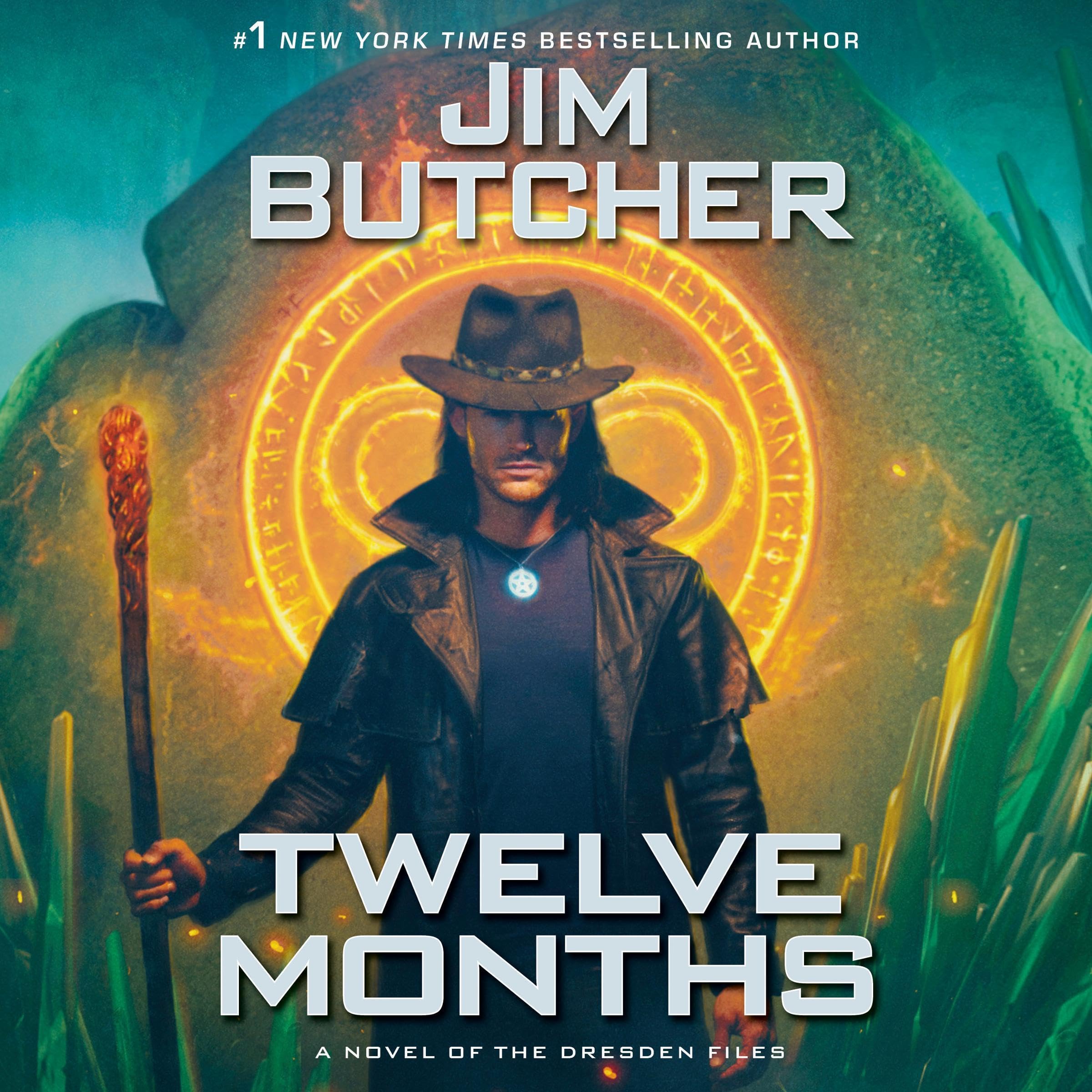
Twelve Months on Audible feels like a necessary pause and a gift. Jim Butcher steps back from apocalyptic momentum to let Harry Dresden breathe—and grieve—and that choice lands especially well in audio. James Marsters continues to be the gold standard for the series. His performance has matured alongside Dresden, and here he brings a quieter, more fragile register without ever losing the bite or humor that defines the character.

In the wake of Murphy’s death, you can hear the weight Dresden carries in every line. Marsters doesn’t oversell the pain; he lets silences, hesitations, and softened sarcasm do the work. As the months pass, that grief slowly reshapes into resolve, and the narration tracks that recovery with impressive emotional precision. It feels earned, not rushed.

Structurally, Twelve Months widens the lens. Rather than one central crisis, we get a mosaic of relationships, obligations, and consequences. It’s a deep breath before the plunge, a chance to take stock of where everyone stands before the endgame accelerates. That broader scope could feel unwieldy, but Butcher handles the ensemble cast with confidence. Familiar voices and new faces each get distinct moments, and Marsters differentiates them cleanly, making even crowded scenes easy to follow.

The result is an audiobook that’s reflective without being slow, intimate without being small. Twelve Months reminds you why this series matters.

Buy your copy here

Review: Slow Horses

Slow Horses by Mick Herron is a sharply observed, darkly funny espionage novel that refreshingly strips away the glamour often associated with the spy genre. Set in the unglamorous backwater of Slough House, the story follows a group of disgraced intelligence officers who feel painfully real rather than heroic. Herron’s greatest strength lies in his realism: the bureaucracy, pettiness, and professional paranoia of modern intelligence work are rendered with convincing detail, making the stakes feel grounded even when the plot turns dramatic.

The novel’s gritty style suits this world perfectly. Herron’s prose is lean, cynical, and often bitingly witty, capturing both the moral ambiguity and the everyday drudgery of the job. The characters, from the bitter, slovenly Jackson Lamb to his damaged but capable subordinates, are thoroughly believable. Their flaws aren’t cosmetic; they drive the narrative and shape the choices they make, lending the story emotional weight as well as tension.

Particularly impressive is the narration, which balances suspense with dry humor and keeps the pacing tight without sacrificing depth. Herron knows when to linger on character and when to push the plot forward. Overall, Slow Horses is an intelligent, engaging novel that rewards readers looking for espionage fiction rooted in realism rather than fantasy.

buy your copy here

Review: Trainspotting


Irvine Welsh’s Trainspotting is a ferocious, darkly comic portrait of addiction, masculinity, and survival on the margins of late-twentieth-century Edinburgh. The novel refuses sentimentality: heroin use is neither romanticized nor moralized, but presented as a grinding cycle of pleasure, squalor, violence, and self-deception. Welsh structures the book as a series of loosely connected episodes rather than a conventional plot, which mirrors the chaotic, stalled lives of its characters and keeps the reader slightly off balance throughout.

One of the novel’s greatest strengths is its use of a Scots narrator. The phonetic Scots dialect is not a gimmick; it is central to the book’s power. It gives the narrative an abrasive intimacy, forcing readers to hear the characters’ voices rather than observe them from a safe distance. The rhythm, humor, and brutality of the language sharpen both the comedy and the horror, making moments of banter genuinely funny and moments of degradation deeply unsettling. While the dialect can be challenging at first, it quickly becomes immersive, and its authenticity lends the novel moral authority.

Trainspotting is uncomfortable, often repellent, but also fiercely alive. Its linguistic daring and unflinching honesty make it a landmark of contemporary British fiction.

Buy your copy here