 |
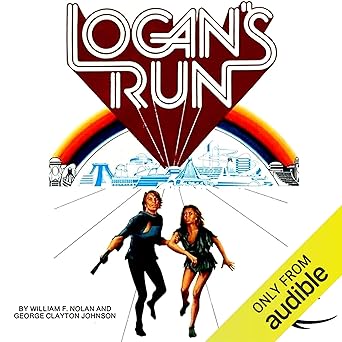
| Logan's Run Cover Art |
Logan's Run by William F. Nolan remains a fascinating piece of science fiction that feels both unmistakably rooted in its era and surprisingly effective in its exploration of authoritarian control, youth obsession, and mortality. While many readers may know the story primarily through its film adaptation, returning to the original novel reveals a work that is often stranger, darker, and far more satirical than its cinematic counterpart.
The premise remains wonderfully compelling. In a future society where life is strictly capped at the age of twenty one, citizens live in a world built around endless pleasure, consumption, and carefully managed ignorance. Once individuals reach their expiration date, they are expected to submit willingly to death. Those who attempt to escape become "runners" and are hunted by Sandmen, elite enforcers tasked with preserving the system. Logan is one such Sandman, entirely committed to the world he serves until circumstances force him to question everything he has accepted as truth.
That central concept remains incredibly strong, and even decades after publication it still feels relevant. The novel explores society’s obsession with youth in ways that feel oddly prescient, and its portrayal of a culture built on distraction and indulgence carries an unsettling edge. Beneath the pulpy science fiction adventure lies a fairly sharp critique of conformity and the willingness of people to ignore uncomfortable truths when their own comfort is protected.
The story itself moves at an impressively fast pace. Logan’s journey takes him through a variety of strange environments and encounters, and the novel rarely pauses for long. At times this relentless momentum means certain characters and ideas are not explored as deeply as they could be, but it also gives the book a raw energy that makes it difficult to put down. There is a constant sense that the world is larger and stranger than Logan ever realised, which keeps the narrative engaging.
What stood out to me most was how imaginative the world building remains. Some elements feel very much like products of late 1960s science fiction, but there is a creativity to the settings, technologies, and social structures that remains entertaining. The novel embraces bold ideas with confidence, even when they occasionally border on the absurd.
The audiobook is elevated considerably by the narration of Oliver Wyman. Wyman delivers a performance filled with energy and emotional nuance that helps ground the novel’s more unusual concepts. His portrayal of Logan captures both his initial certainty and his growing confusion as his worldview begins to collapse.
Wyman’s pacing works particularly well with the novel’s rapid structure. He keeps the momentum high during action sequences while allowing quieter moments of reflection enough space to resonate. His character voices are distinct without feeling exaggerated, and he handles the shifting tones of satire, suspense, and introspection with real skill.
There is also an emotional sincerity to his narration that strengthens Logan’s personal journey. As the protagonist moves from loyal enforcer to questioning outsider, Wyman ensures that transformation feels believable.
Logan’s Run may occasionally show its age, but its inventive premise, relentless pacing, and underlying social commentary make it an enjoyable and thought provoking read. Combined with Oliver Wyman’s strong narration, this remains a highly entertaining science fiction classic that still has plenty to say.
Buy your copy here

No comments:
Post a Comment